
Last updated: September 2026
Table of Contents
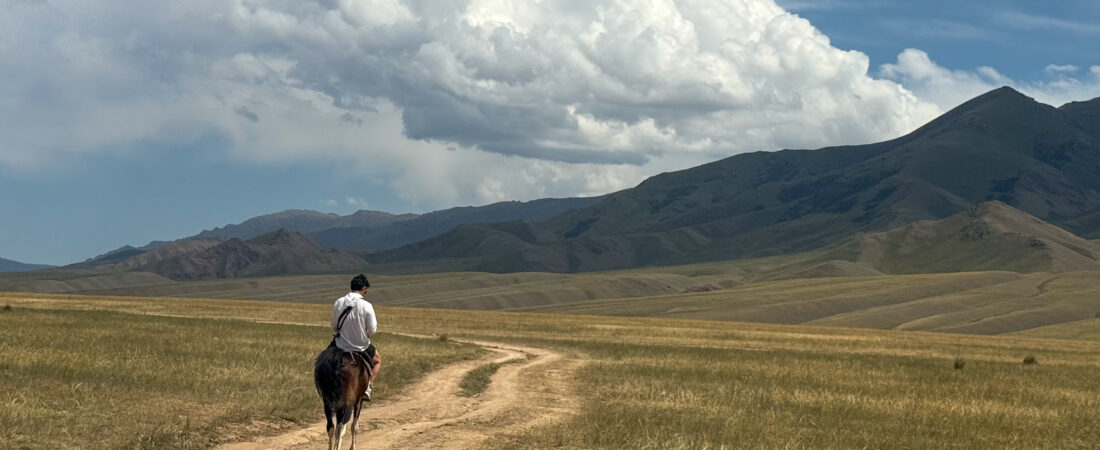
ToggleI did a 3-day horseback riding trip to Song Kul Lake in Kyrgyzstan this summer, and while it was one of the most beautiful experiences I had in the country, there were definitely a few things I wish I had known before we started.
Song Kul Lake was one of the highlights of my time in Kyrgyzstan, but the horse trek was more challenging, colder and more physically demanding than I expected. I also quickly learned that being prepared for a few small things can make a huge difference when you’re spending several days in the mountains.
If you’re planning a Song Kul horseback riding trip, here are the things I wish someone had told me before I went.
Song Kul Horse Trek: Quick Facts
Trip length: 3 days, 2 nights
Horseback riding: Approximately 5 hours per day
Location: Song Kul Lake, Kyrgyzstan
Accommodation: Yurt camps
Showers: Very limited or unavailable
Electricity: Very limited or unavailable
Cell service: Limited
What to pack: Warm layers, gloves, hat, windbreaker, power bank and minimal luggage
1. Some Horseback Riding Experience Would Be Helpful
This was probably the biggest surprise for me.
I assumed the horseback riding would be relatively relaxed, especially because many people in our group had little or no riding experience. Instead, our guides had the horses trotting and cantering at times on the first day.
Only two people in our group had previous riding experience, while the rest of us were basically beginners.
The terrain itself wasn’t necessarily too difficult during the first couple of days, but the pace the guides pushed the horses at made things a little uncomfortable if you weren’t used to riding.
Your experience can also depend heavily on the horse you’re assigned. Some horses may be more difficult to control than others.
At one point, a horse took off into a gallop with a beginner rider, and he ended up falling off. Thankfully, he was okay, but it definitely made me realize that this isn’t necessarily a slow, leisurely horseback ride the entire time.
If you’re a complete beginner, I wouldn’t necessarily let that stop you from going. However, I would mentally prepare yourself for more than just walking on horseback.
You’re also likely going to spend around five hours a day on the horse, so even if you’re comfortable riding, your legs, knees and backside may be feeling it by the end of the day!
My advice
If you have the opportunity to get some basic horseback riding experience before your Song Kul trip, I would. At the very least, make sure you’re comfortable getting on, stopping, steering and controlling a horse.
Also, don’t be afraid to tell your guide if you’re uncomfortable with the pace or the specific horse you are using. They can make adjustments.
2. Be Prepared for a Steep Descent on the Last Day
The third day was much steeper than I expected.
To get back to our starting point, we descended more than 800 meters, and parts of the route were quite steep.
The horses are strong and used to this type of terrain, so they weren’t exactly struggling. But sitting on a horse while going down a steep mountain can be pretty nerve-wracking when you’re not used to riding.
We definitely weren’t prepared for how steep it would feel.
I’ve even heard stories of people getting overwhelmed or crying during this section of the trek, so don’t make the mistake of assuming the final day will be the easiest just because you’re heading downhill.
Mentally prepare yourself for the descent.
If you’re nervous about steep terrain, I’d also recommend asking your tour operator what the route looks like before booking. The experience can vary depending on the trek you choose.
3. Check Exactly What Your Song Kul Tour Includes
Not every Song Kul horseback riding tour is the same.
Before booking, make sure you understand exactly what activities and transportation are included in your itinerary.
I heard about other tours that included additional activities, such as hiking or walking the horses around the lake. Our tour didn’t include those activities.
Luckily, our yurt camp had a volleyball court, so we had something to do during our downtime.
But if you’re expecting a packed itinerary once you reach Song Kul Lake, make sure you ask your tour operator what’s actually included.
Don’t assume every Song Kul horse trek offers the same experience.
It’s also worth checking how much riding you’ll actually be doing each day. Five hours in the saddle is very different from a tour that only has a couple of hours of riding.
Before booking, I would specifically ask:
How many hours will I spend on horseback each day?
How much time will we spend at Song Kul Lake?
Are hiking or other activities included?
Are meals included?
Is transportation included?
Where does the trek start and finish?
What type of accommodation will we stay in?
These details can make two tours that look similar online feel completely different once you’re actually there.
4. Not All Song Kul Tours Pick You Up From Bishkek
This is something I definitely recommend checking before you book your tour.
Some tour groups will pick you up directly from Bishkek, while others require you to make your own way to a pickup point in Kyzart before the trek begins.
Kyzart is around a four-hour drive from Bishkek, so this can make a big difference to your plans.
Make sure you know:
Where your tour starts
Whether transportation from Bishkek is included
What time you need to arrive
Whether you need to arrange your own transportation to the starting point
How you’ll get back to Bishkek afterward
This is one of those details that can easily get overlooked when you’re focused on booking the actual horseback riding experience.
If your tour doesn’t include transportation from Bishkek, you’ll want to plan this ahead of time rather than figuring it out the morning your trek starts.
5. Even in Summer, Song Kul Can Be Freezing
This is probably the thing I was most unprepared for.
I visited during the summer and still underestimated how cold Song Kul could get.
At our first yurt camp and around Song Kul Lake, I was absolutely freezing. At one point I was wearing four layers, leggings, pants and double socks—and I was still cold.
The temperature can drop dramatically once you’re at higher elevations, and the weather can change quickly.
And it’s not just the temperature you need to worry about.
The wind can make it feel even colder.
You’re also spending hours on horseback, which means you’re exposed to the wind for long periods of time.
What to pack for the cold
I recommend bringing:
A warm jacket
Windbreaker
Hat
Gloves
Warm socks
Multiple layers
Long pants
Do not assume that because you’re visiting Kyrgyzstan in summer, you won’t need warm clothes.
If anything, I would rather overpack slightly when it comes to warm clothing than spend an entire evening sitting in a yurt trying to warm up.
6. Bring a Power Bank—There Is Very Little Electricity
Don’t count on being able to charge your phone at the yurts.
There were outlets at our yurt camp, but none of them worked when we were there.
Since you’ll likely be taking plenty of photos and using your phone throughout the trek, I’d highly recommend bringing a fully charged power bank.
If you have multiple devices, bring enough battery capacity to get you through the entire trip.
This is one of those things that’s easy to overlook when you’re staying in normal accommodation, but you’re much more off-grid once you reach Song Kul.
I’d also make sure your phone is fully charged before leaving and download anything you might need ahead of time.
7. Don’t Rely on an eSIM for Cell Service
If staying connected is important to you, this is another thing I’d look into before leaving.
The eSIMs we had weren’t useful in the more remote areas we traveled through.
We were told by locals that Mega tends to work better in more remote areas, while many eSIMs rely on Beeline, which is stronger in cities.
That said, one of the best parts of doing the Song Kul trek is getting away from your phone for a few days.
Unless you absolutely need to be connected, I’d take the opportunity to disconnect and enjoy it.
Just make sure you’ve downloaded anything you’ll need before leaving—especially maps, accommodation information and important booking details.
I wouldn’t want to arrive at a remote yurt camp and realize the information I need is only available online.
8. You Will Probably Wear the Same Clothes for Several Days
There are no normal showers during the trek, so don’t expect to be getting cleaned up every night.
Everyone in our group essentially wore the same outfits throughout the trip.
And honestly, by the end, your clothes—and probably your bag—are going to smell like horses.
But you’re going to be in the middle of the mountains for several days, so I wouldn’t waste valuable bag space packing a completely different outfit for every day.
Pack light and prioritize warm clothes over having a fresh outfit each morning.
9. Secure Everything Before Getting on Your Horse
This is something I learned by watching other people’s belongings disappear along the trail.
I saw people lose things like:
Lip gloss
Hats
Hand sanitizer
Jackets
Phones
When you’re sitting on a moving horse, things can fall out much more easily than you expect.
And you never know when your horse might suddenly speed up.
Before setting off, make sure everything you need is securely zipped inside a bag or attached somewhere it can’t fall.
I’d especially avoid putting your phone or other valuables in an open pocket.
If you think you might need something while riding, make sure it is actually secured to you or your bag.
This is also why I’d recommend keeping your day-to-day essentials somewhere you can easily access without having to dig through your main luggage.
10. Braid Your Hair If You Have Long Hair
This might seem like a small thing, but I was very glad I had my hair tied up.
Your hair will get knotted, dusty and dry very quickly while riding.
If you have long hair, I’d recommend putting it into braids before you start the trek.
It’s much easier than trying to deal with tangled hair after spending hours on horseback and in the wind.
It’s a small thing, but you’ll thank yourself later.
Would I Do the Song Kul Horse Trek Again?
Absolutely.
Despite all of the things I wish I had known beforehand, Song Kul Lake was one of the highlights of my time in Kyrgyzstan.
The scenery is incredible, staying in yurts gives you a completely different experience from a typical hotel, and being able to ride through the mountains and arrive at Song Kul Lake is something I’ll remember for a long time.
But I think the experience would have been even better if I had known just how cold, windy and physically demanding parts of the trip could be.
If you’re planning to do the Song Kul horseback riding trek, go for it—but pack warm, keep your luggage light, secure your belongings and don’t underestimate the horses or the weather.
Those few things will make the experience much more enjoyable.
And honestly, there is just something so freeing about being in the middle of nowhere, surrounded by mountains, on the back of a horse. It’s an experience I’m really glad I did.
Frequently Asked Questions About Song Kul Horseback Riding
Do you need horseback riding experience for Song Kul?
Not necessarily. Our group included several people with little or no riding experience, but the horses did trot and canter at times.
I’d recommend having at least some basic riding experience if possible, especially because you’ll spend around five hours a day on horseback.
The guides also didn’t do a great job explaining how to ride the horse at the beginning, so it was something we mostly had to figure out as we went.
How difficult is the Song Kul horseback riding trek?
The difficulty depends on your riding experience and the tour you choose.
The first two days of our trek were manageable, but the final descent was much steeper than expected. The long hours on horseback can also be tiring for beginners.
Many people in our group complained of sore knees, calves and backs by Day 2, so don’t underestimate how physically demanding several hours in the saddle can be.
How many hours a day do you ride horses to Song Kul?
Our group spent approximately five hours each day on horseback.
This can vary depending on the tour and itinerary, so check with your tour operator before booking.
How cold is Song Kul in summer?
Much colder than I expected!
Even though I visited during summer, I was wearing multiple layers and was still cold, particularly around the yurt camps and lake.
Bring warm layers, gloves, a hat and a windbreaker. The wind can also make it feel significantly colder while you’re riding.
Are there showers at Song Kul Lake?
Don’t expect normal showers during a multi-day horseback riding trip.
Facilities vary between yurt camps, so check with your tour operator before you go.
We were lucky to have flushable toilets and running water at sinks, but there were no showering facilities at any of the camps we stayed at.
Is there electricity at Song Kul?
Electricity can be very limited.
Our yurt camp had outlets, but they weren’t working when we visited. I’d strongly recommend bringing a fully charged power bank so you aren’t relying on the yurts to charge your devices.
Is there cell service at Song Kul Lake?
Cell service is limited and can vary depending on your network and location.
Our eSIMs weren’t particularly useful in the remote areas we traveled through, so I wouldn’t rely on having a connection throughout the trek.
Download your maps and important information before you leave.
What should I pack for a Song Kul horse trek?
Pack light but prioritize warm clothing.
A warm jacket, windbreaker, gloves, hat, warm socks, layers and a power bank would be at the top of my list.
You also won’t need a completely different outfit for every day, especially since showers are limited or unavailable.
Do Song Kul tours pick you up from Bishkek?
Not all of them.
Some tours include transportation from Bishkek, while others require you to travel to the trek’s starting point yourself.
Make sure you check where your tour begins before booking. If yours does not include transportation, there are shared buses that run between Kyzart and Bishkek.
Is Song Kul horseback riding worth it?
For me, absolutely.
The trek was challenging at times, but the scenery, yurts and experience of traveling through the mountains on horseback made it one of my favorite experiences in Kyrgyzstan.
There is just something so freeing about being in the middle of nowhere on the back of a horse. It’s an experience I’ll remember for a long time.
Author: May
May is a travel blogger and photographer obsessed with adventures and solo trips. She has explored over 55 countries and wants to help you travel smarter. Learn more about her and her adventures here